Place guide · Roma
Trevi Fountain
Fontana di TreviAn 18th-century late-Baroque fountain at the junction of three roads in central Rome; the sculptural ensemble and the small piazza in front are the lasting subject.
Report an issue
The public correction queue is not connected yet. Until it is, official source links remain visible so changing details can be checked without pretending a report was received.
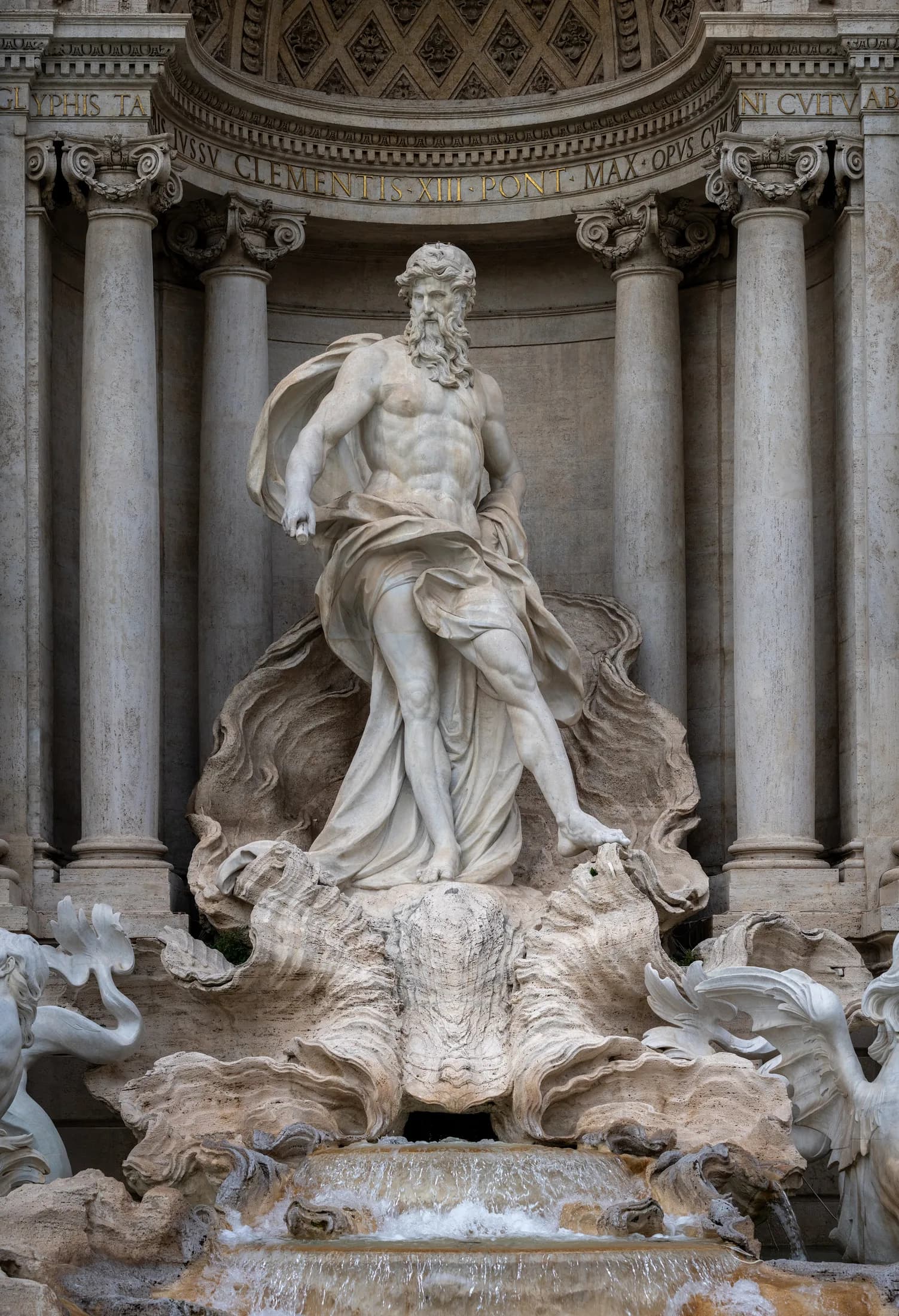
A closer look
The fountain fills the entire end of the small piazza, so it is read as architecture before it is read as a fountain; the sculptures, the central niche and the water occupy the eye in one block.
On the piazza, the human scale of the fountain, the surrounding buildings and the constant flow of people keep changing the frame every few metres.
Open
- Late in the day the upper windows of the buildings catch the warm light; the fountain's white marble holds the long shadow of any single visitor.
- It is the largest Baroque fountain in Rome and the terminal point of the restored Acqua Vergine aqueduct.
- The sculptural programme — Oceanus in the central niche, the Tritons, the allegorical reliefs — reads as a complete late-Baroque composition in one frame.
- It is one of the few Roman sites whose image, sound and physical visit all share the same scale.
Before you go
Current details checked July 2026
- Best season
- Late spring and early autumn are the most comfortable for standing in the open piazza. Summer is hot and busy; winter mornings are quiet but cooler.
If you want a quieter moment, arrive before 08:00 or after 22:00.
Editorial guidance - Official website
- https://en.wikipedia.org/wiki/Trevi_FountainOfficial source
- Before you go 1
- The fountain is open and free; access is from the small piazza and the surrounding streets.Editorial guidance
- Before you go 2
- The piazza is very crowded most hours of the day; early morning and the evening blue hour are calmer.Editorial guidance
- Before you go 3
- Pickpocketing is a known issue around the fountain; carry only what you need.Editorial guidance
- Before you go 4
- Sitting on the fountain edge or wading into the basin is forbidden and enforced; respect the barriers and signage.Editorial guidance
- Before you go 5
- Late afternoon light on the white marble gives the cleanest view of the sculptural programme.Editorial guidance
- Before you go 6
- Early morning and late evening are the only relatively quiet windows for the small piazza.Editorial guidance
Travel images, with their sources
This source-checked Wikimedia Commons image is shown with its author and reusable licence.
Source checked 2026-07-29 · CC0
This source-checked Wikimedia Commons image is shown with its author and reusable licence.
Official sourceShare one careful record
Choose one to six original images from this place. Nothing is published automatically; every record needs rights and place review.
Practical notes
Note 1
Fountain free; no admission fee.
Note 2
Closest metro: Barberini (line A) or Spagna (line A), then walk.
Note 3
Specific 2026 maintenance works not pinned in this batch.
Note 4
The fountain has been restored several times over the centuries; the current sculptural programme is from the 18th century.
Note 5
Throwing a coin over your shoulder into the fountain is a popular local tradition; the collected coins are donated to charity by the city.