Place guide · 京都
Fushimi Inari-taisha
伏見稲荷大社Head shrine of the Inari cult, with thousands of vermilion torii running up Mount Inari; pilgrims and visitors share a mountain walk lined with shrine gates.
Report an issue
The public correction queue is not connected yet. Until it is, official source links remain visible so changing details can be checked without pretending a report was received.
A closer look
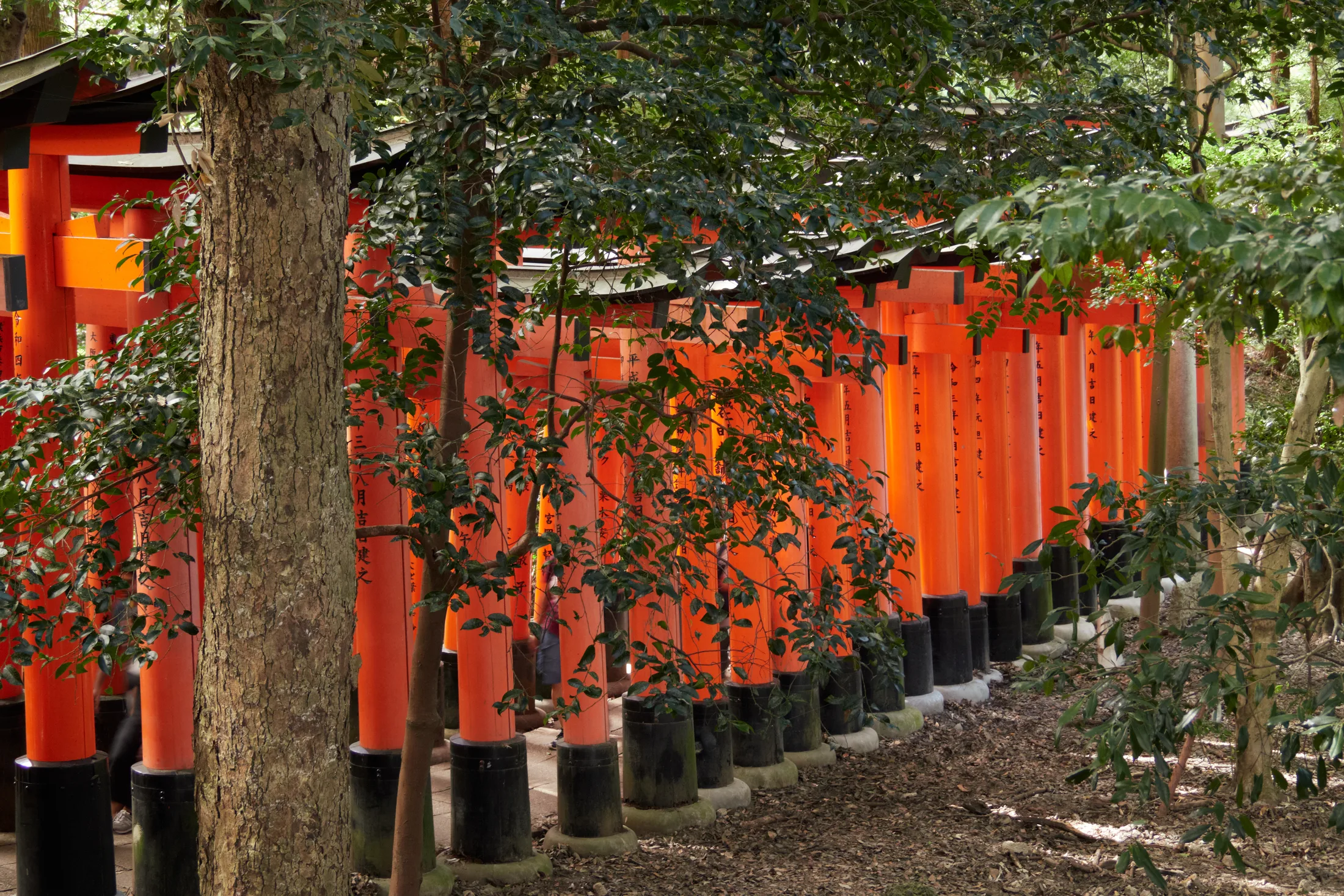
The lower approach is a normal city shrine; once you climb into the mountain, the torii begin to form a tunnel of red-orange light that recedes into the forest as you climb.
The walk reveals itself in layers: the outer shrine, the cluster of small sub-shrines, then the long climb to the summit area, with stone foxes and miniature altars along the way.
Open
- Late in the day the colour of the torii deepens in the long shadows; the path is still busy at the bottom but quietens noticeably as you walk further up.
- It is the head shrine of Inari worship in Japan, dedicated to the kami of rice, prosperity and business; the devotion is centuries old and still active.
- The torii and its four satellite sub-tori represent Mount Meru in classical cosmology, with thousands of gates donated by individuals and businesses creating a continuous red-orange landscape.
- It sits inside an urban hill; the walk combines forest, mountain and the southern Kyoto skyline in a single short excursion from the city.
Before you go
Current details checked July 2026
- Best season
- Early morning is calmer and cooler year-round. Spring and autumn are most popular for the surrounding foliage.
Specific festival dates vary year to year; the Hatsumōde crowds in early January are unusually large.
Editorial guidance - Getting there
- JR Inari Station (Nara Line) is the closest stop; the entrance is a short walk from the platform. Keihan Fushimi-Inari Station on the Keihan Main Line is also a valid approach.Official source
- Official website
- https://en.wikipedia.org/wiki/Fushimi_Inari-taishaOfficial source
- Before you go 1
- Photography is allowed; respect signs around active worship areas.Editorial guidance
- Before you go 2
- There is no admission fee; the shrine operates 24 hours a day.Editorial guidance
- Before you go 3
- Wear footwear you are comfortable climbing in; the stone paths can be uneven and slippery in rain.Editorial guidance
- Before you go 4
- Avoid the very front of the lower torii if a service is in progress.Editorial guidance
Travel images, with their sources
This source-checked Wikimedia Commons image is shown with its author and reusable licence.
Source checked 2026-07-29 · CC0
This source-checked Wikimedia Commons image is shown with its author and reusable licence.
Official sourceShare one careful record
Choose one to six original images from this place. Nothing is published automatically; every record needs rights and place review.
Practical notes
Note 1
No admission fee; the shrine is open 24 hours.
Note 2
JR Inari Station on the Nara Line is the closest stop; the shrine entrance is steps from the platform.
Note 3
Specific 2026 hatsumōde and festival dates not pinned in this batch.
Note 4
The summit loop is about 2 hours return; shorter walks are possible on the lower path.