Place guide · 京都
Kiyomizu-dera
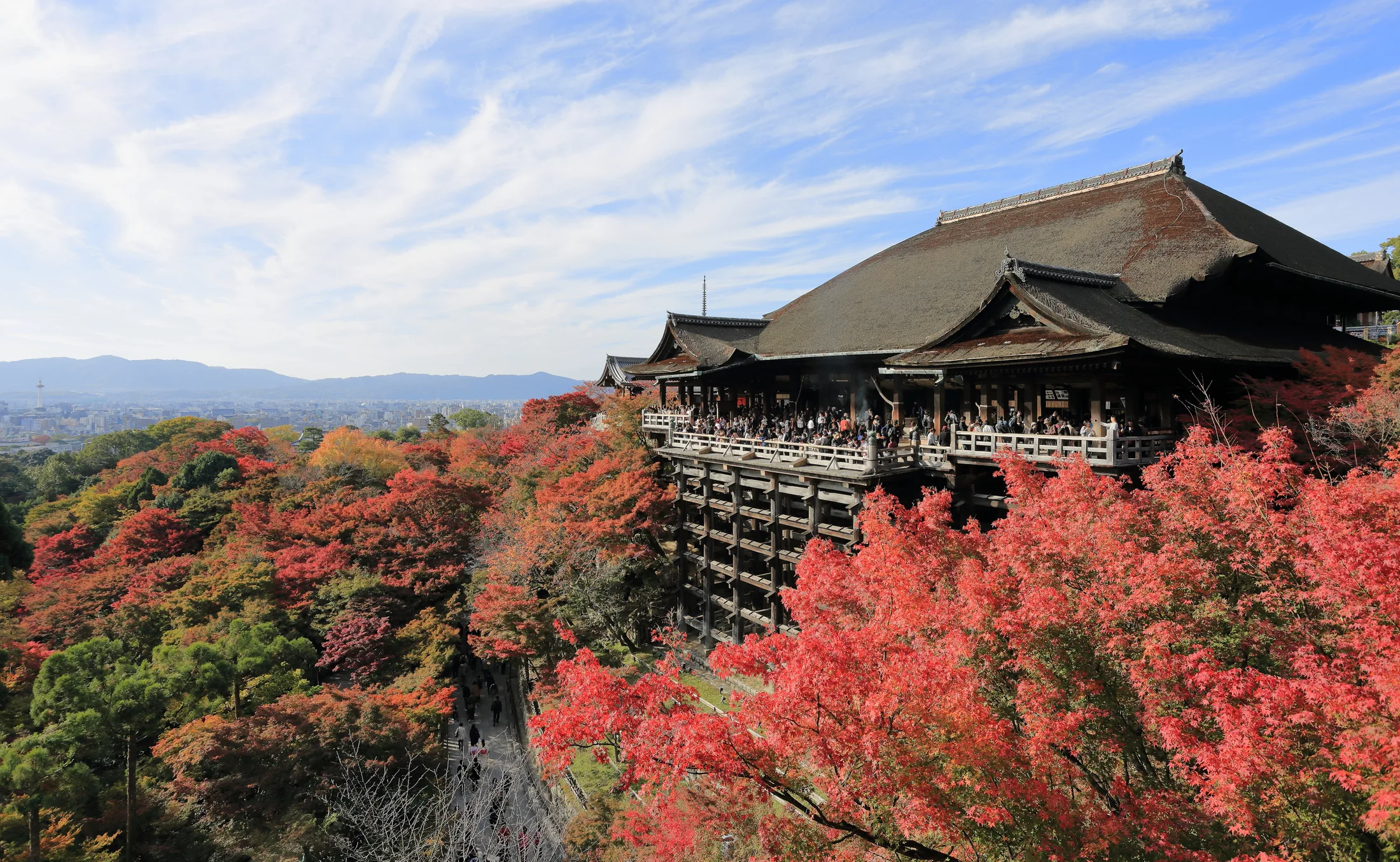
清水寺A Buddhist temple on the eastern hills of Kyoto, famous for its wooden stage built without nails and a long, sloping approach lined with small shops and tea houses.
Report an issue
The public correction queue is not connected yet. Until it is, official source links remain visible so changing details can be checked without pretending a report was received.
A closer look
Walking from Kiyomizu-michi or from the Yasaka Pagoda lane, the temple appears as a long wooden terrace jutting out from the hillside, with the stage as the visual centre of the composition.
From the main stage, the city of Kyoto unrolls below in a way that mixes tiled roofs, the slope of Higashiyama and the hush of cedar trees on either side.
Open
- Late in the day the soft light catches the upper beams of the stage and the maple trees in the surrounding gullies; the longer approach from the southern side gives the temple a slow, hilled entry.
- It is one of the most celebrated wooden temples in Japan, founded in the late 8th century according to the temple's own history.
- The 13-metre wooden stage is built without nails and is famous in its own right; together with the main hall and the surrounding sub-temples it forms one of Kyoto's most distinctive ensembles.
- It is part of the UNESCO-listed Historic Monuments of Ancient Kyoto; the wider Higashiyama hillside retains traditional streetscapes around the temple.
Before you go
Current details checked July 2026
- Best season
- Late March to early April for cherry blossom and evening illuminations; mid-November to early December for autumn colour.
Specific 2026 evening-illumination dates and admission prices not pinned in this batch.
Editorial guidance - Official website
- https://en.wikipedia.org/wiki/Kiyomizu-deraOfficial source
- Before you go 1
- An admission fee applies to the main hall complex; verify the current ticket policy.Editorial guidance
- Before you go 2
- Photography of the exterior and grounds is allowed; specific halls have their own rules.Editorial guidance
- Before you go 3
- Spring and autumn are the most crowded periods; weekday early morning is calmer.Editorial guidance
- Before you go 4
- Wear comfortable shoes: the approach slopes and the grounds have many steps.Editorial guidance
Travel images, with their sources
This source-checked Wikimedia Commons image is shown with its author and reusable licence.
Source checked 2026-07-29 · CC BY-SA 4.0
This source-checked Wikimedia Commons image is shown with its author and reusable licence.
Official sourceShare one careful record
Choose one to six original images from this place. Nothing is published automatically; every record needs rights and place review.
Practical notes
Note 1
Admission fee applies for the main hall complex.
Note 2
Several bus lines stop near the temple; Kyoto City Bus routes 100 and 206 are commonly used.
Note 3
Specific 2026 evening-illumination and admission prices not pinned in this batch.
Note 4
The temple is part of the UNESCO World Heritage-listed Historic Monuments of Ancient Kyoto.