Place guide · 東京
Meiji Jingū
明治神宮A Shinto shrine set inside an urban forest of about 70 hectares in central Tokyo, dedicated to the deified spirits of Emperor Meiji and Empress Shōken.
Report an issue
The public correction queue is not connected yet. Until it is, official source links remain visible so changing details can be checked without pretending a report was received.
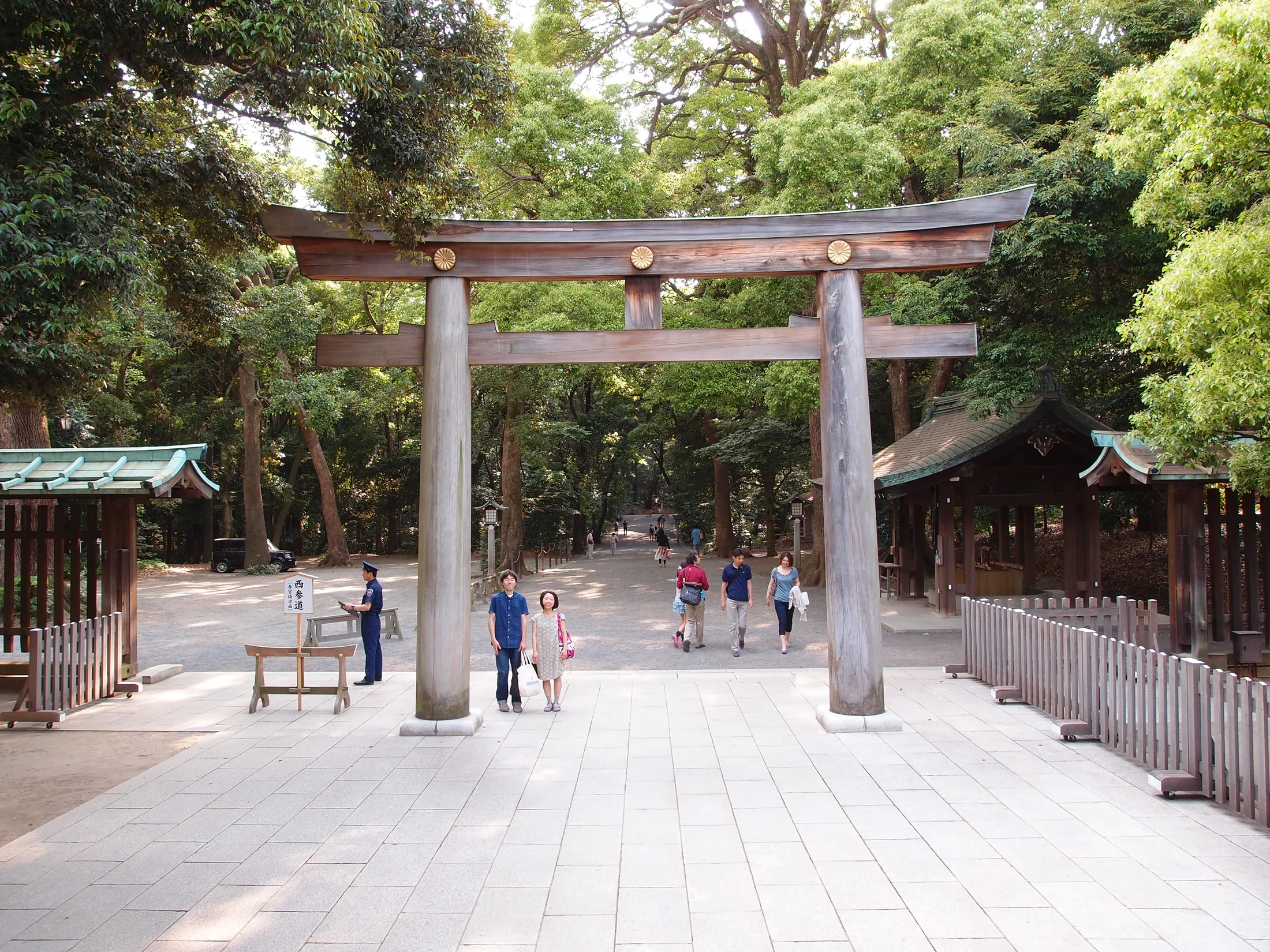
A closer look
Entering through the torii from the Harajuku side, the city falls away inside a single block; the broad gravel paths, the layered canopy and the long, quiet walk toward the main buildings make the forest feel larger than its actual footprint.
On a clear morning the sun comes through the trees at a low angle and the gravel crunches underfoot; the main hall appears between trunks in stages rather than all at once, with worshippers and staff moving at the same unhurried pace.
Open
- Late in the afternoon the western light catches the upper branches; the path is still busy but the pace slows and the surrounding neighbourhoods feel far away even though Yoyogi and Harajuku are a short walk to the south.
- It is one of the few places in central Tokyo where the immediate landscape is still a mature forest; the trees were planted intentionally over more than seventy years and the canopy is now fully established.
- The shrine honours Emperor Meiji and Empress Shōken, and the site therefore reads as a national memorial as well as a working place of worship.
- It hosts a rotating calendar of seasonal rituals and public events: hatsumōde at New Year, the spring Grand Festival, summer performances and autumn ceremonies.
Before you go
Current details checked July 2026
- Best season
- Late March to early April for fresh green and spring rituals; late October to November for autumn colour and a steadier rhythm than cherry-blossom peak.
Specific 2026 festival dates — including hatsumōde and the Grand Festival — not pinned in this batch and need reviewer confirmation.
Editorial guidance - Getting there
- Harajuku Station (JR Yamanote Line) on the north side; Meiji-jingūmae Station (Tokyo Metro Chiyoda Line, Fukutoshin Line) on the south side.Official source
- Official website
- https://en.wikipedia.org/wiki/Meiji_Jing%C5%ABOfficial source
- Before you go 1
- Photography is allowed on the approach paths and in the outer grounds; the inner sanctuary is restricted. Do not enter with cameras where signs forbid it.Editorial guidance
- Before you go 2
- There is no admission fee for the forest and the approach. Donations are voluntary at the shrine office.Editorial guidance
- Before you go 3
- New Year hatsumōde (late December through the first days of January) draws very large crowds. A weekday morning is calmer.Editorial guidance
- Before you go 4
- Bow once at the torii before entering, and follow the custom of purifying hands and mouth at the temizuya before approaching the main hall.Editorial guidance
Travel images, with their sources
This source-checked Wikimedia Commons image is shown with its author and reusable licence.
Source checked 2026-07-29 · CC BY 2.0
This source-checked Wikimedia Commons image is shown with its author and reusable licence.
Official sourceShare one careful record
Choose one to six original images from this place. Nothing is published automatically; every record needs rights and place review.
Practical notes
Note 1
The outer grounds are open and free; donations are voluntary at the shrine office.
Note 2
Closest stations: Harajuku on the JR Yamanote Line, Meiji-jingūmae on the Tokyo Metro Chiyoda or Fukutoshin lines, and the south exit of Harajuku is also the practical start of the forest walk.
Note 3
Specific 2026 hatsumōde and Grand Festival dates were not pinned in this batch and need reviewer confirmation.
Note 4
The Meiji Jingu Inner Garden (Yoyogi Shinden) is a separate paid garden with its own opening hours; this batch does not list it as a primary feature.